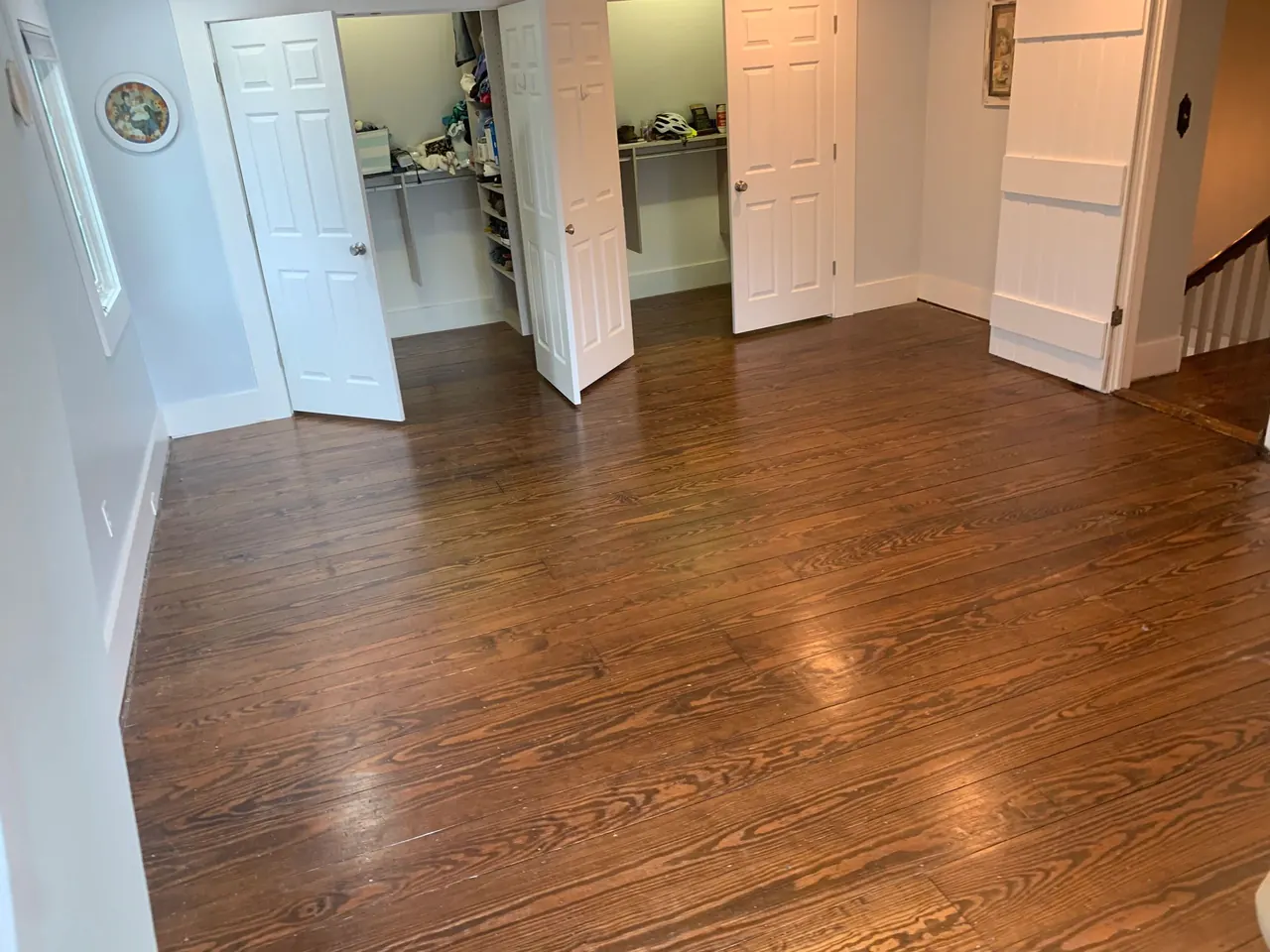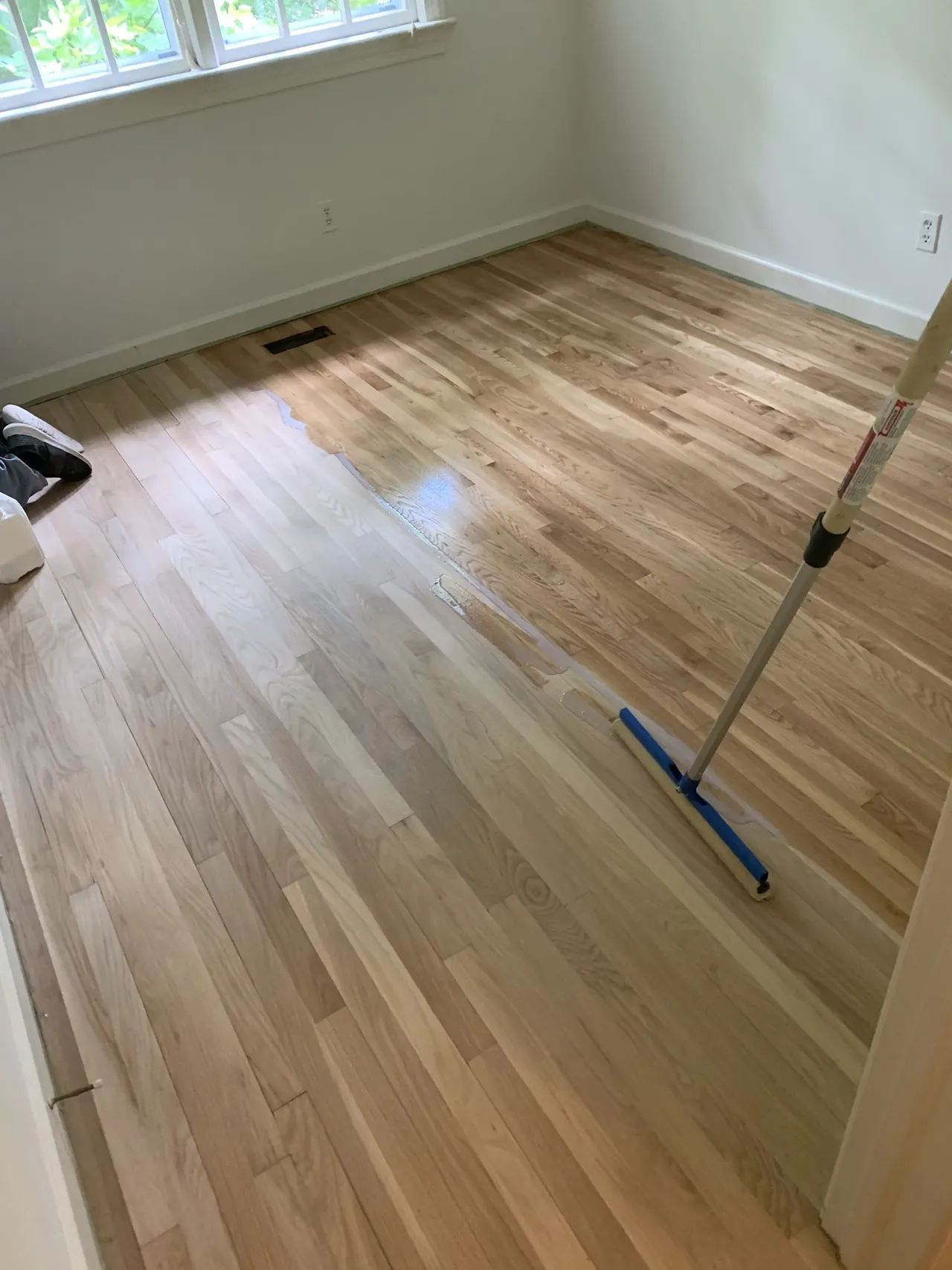

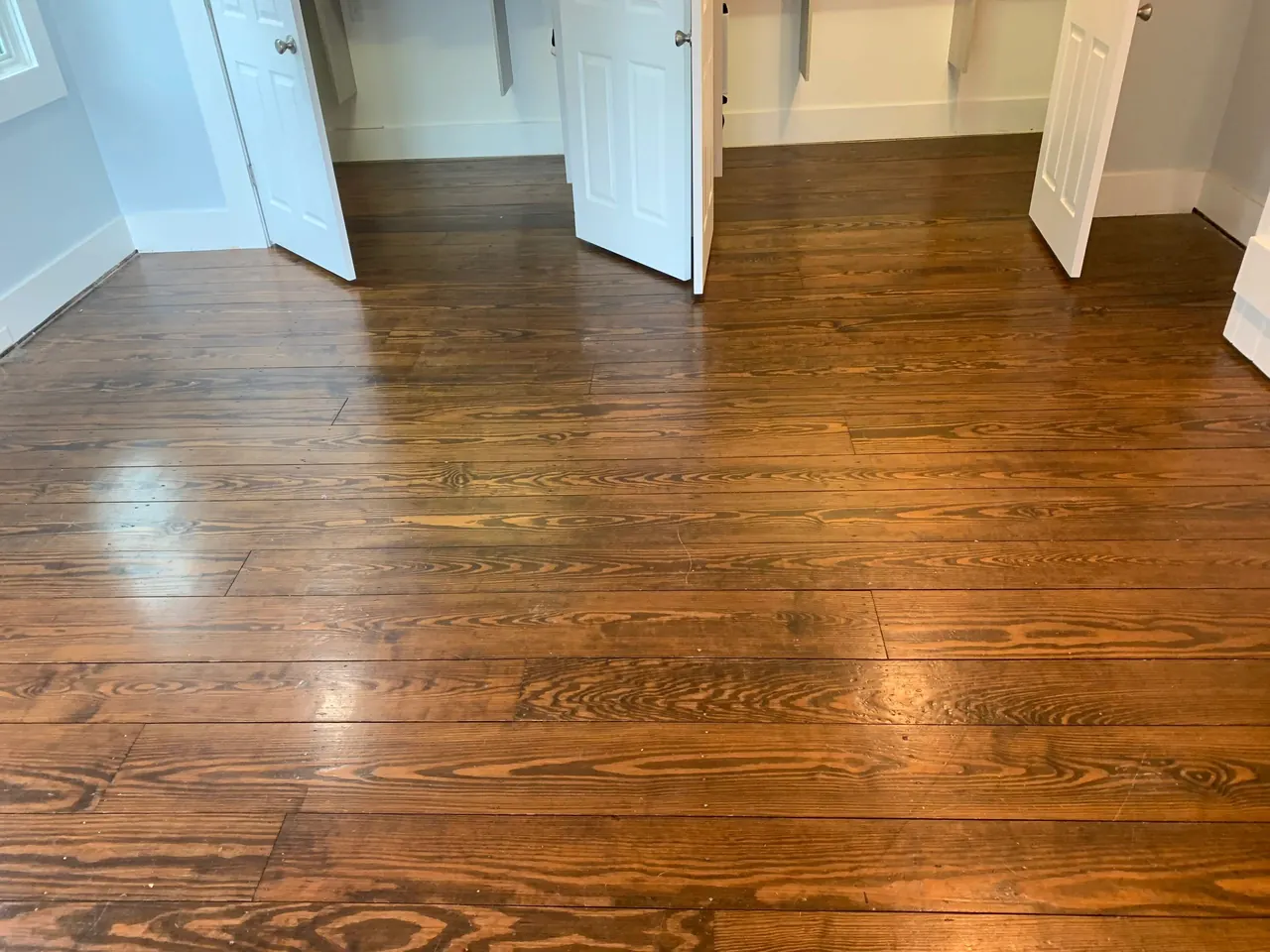
We regularly walk into homes where the owners are ready to replace their hardwood. It looks gray, scratched, stained or patched, and new flooring seems like the only fix. Surprisingly often, it isn't. Solid hardwood can be sanded down to fresh wood and refinished, and damaged sections can be repaired. Here are seven signs your floor is a good candidate.
1. The damage is on the surface
Scratches, dull traffic paths and worn finish live in the top layer. Sanding removes them. If you can see the scratches but can't catch a fingernail deeply in them, refinishing will likely erase them.
2. The boards are solid hardwood
Solid oak and pine can be sanded many times over their life. Look at a floor vent or the edge of a board at a threshold: if the wood is the same all the way through, it's solid. Engineered floors depend on wear-layer thickness, which we check in person.
3. Stains are limited to a few areas
Pet stains or water marks in one area can often be fixed by replacing just those boards and blending them in during refinishing. One customer's floors in a long-time pet-friendly rental "now look brand new" after this approach.
4. The floor feels solid underfoot
Squeaks and a few loose boards are fixable. Soft or spongy spots mean subfloor damage that must be repaired first, still usually cheaper than replacing the whole floor. See flooring repair.
5. You just found it under carpet
Many homes built from the 1950s to the 1980s in Kempsville, Bayside, Thalia, Indian River and South Norfolk have oak hiding under wall-to-wall carpet. Staple holes and pad residue sand right out.
6. You only dislike the color
An orange 1990s stain or a yellowed finish isn't a reason to replace. Once sanded to bare wood, you can choose a new stain, from natural to Provincial to a deep Jacobean.
7. The boards aren't cupped or buckled from an ongoing leak
Cupping caused by a fixed, one-time leak can often flatten after drying and sanding. Cupping from an ongoing moisture source, like a damp crawl space or slab, has to be solved first. If moisture is active, we'll tell you.
When replacement makes more sense
- Boards are worn too thin to sand again (exposed tongues or nail heads)
- Widespread water damage or rot across most of the room
- Engineered flooring with a very thin wear layer
- You want a different material, like waterproof LVP in a beach rental
Get an honest opinion
We'd rather refinish a floor that can be saved than sell you one you don't need. ANR Flooring LLC serves homeowners across Virginia Beach and Chesapeake with free estimates and hardwood refinishing.